BPKIHS at a Glance
Nepal uses the Nepalese Rupee (NPR). Exchange rates fluctuate, so always confirm the current INR-to-NPR rate before budgeting rather than relying on a fixed figure. Indian currency is widely accepted in border towns; ATMs and bank transfers are available in college cities. Local SIM cards (Ncell, Nepal Telecom) are available near most campuses and generally straightforward to get with a passport copy. Internet and WiFi availability varies by hostel/college — confirm specifics for a given college directly, since this isn’t uniform across all campuses.
About BP Koirala Institute of Health Sciences (BPKIHS)
BP Koirala Institute of Health Sciences (BPKIHS) is an autonomous health sciences university established in 1993 in Dharan, in eastern Nepal’s Koshi Province. It was set up as a centre of excellence in health science education and operates on the pattern of a self-governing deemed university with its own examinations and curriculum.
For Indian students, BPKIHS is frequently ranked among the most academically respected NMC-approved options in Nepal. Its integrated, community-oriented MBBS curriculum and its 700-plus-bed teaching hospital give students unusually high clinical exposure from the early years of the programme.
Why Choose BPKIHS?
- Autonomous, government-backed institution with its own degree-awarding status.
- Large in-house teaching hospital delivering high patient volume and hands-on clinical training.
- Strong, consistent FMGE performance relative to peer colleges.
- Integrated, community-based curriculum with early clinical postings.
- Established campus and hostel infrastructure built specifically for health sciences.
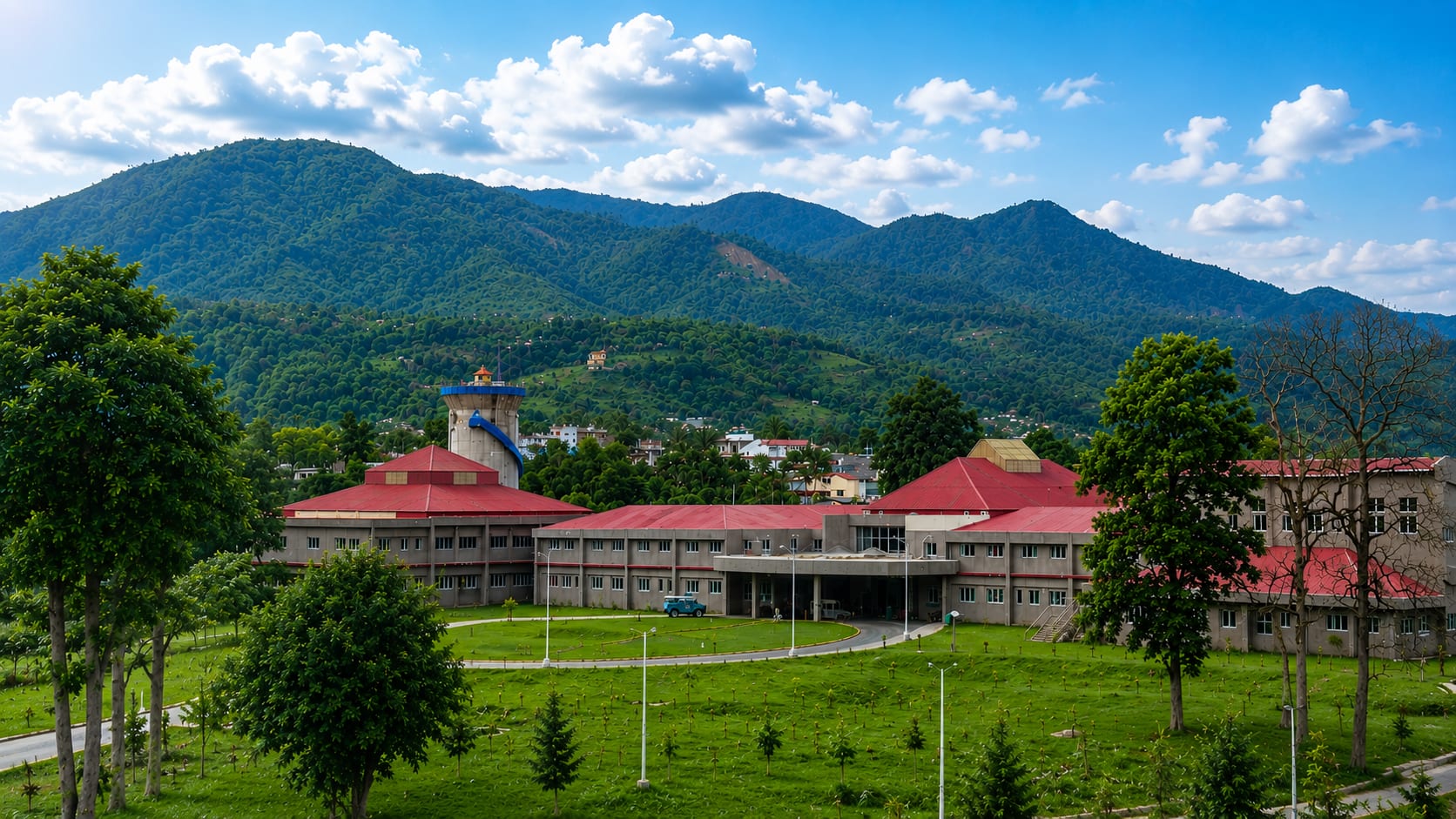
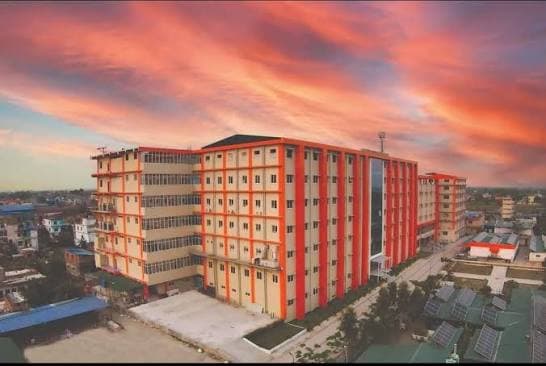
BPKIHS Teaching Hospital, Dharan
BPKIHS Teaching Hospital, Dharan — the primary clinical training ground for BPKIHS students.
A multi-speciality tertiary-care teaching hospital serving eastern Nepal, giving students exposure to a broad case mix across specialities.
BPKIHS — Pros & Cons
Pros
- Among the most respected NMC-approved colleges in Nepal
- Strong FMGE track record
- Very high clinical exposure via a large own hospital
- Government-backed, stable institution
Cons
- More competitive — stronger NEET scores improve chances
- Dharan is a smaller town than Kathmandu or Pokhara
Should You Choose This College?
Coming SoonOur team hasn't scored BPKIHS yet — check back soon, or explore the detailed sections below.
Our Honest Assessment of BPKIHS
BP Koirala Institute of Health Sciences occupies a category of its own among NMC-approved Nepal colleges: it is the only autonomous health sciences university outside Kathmandu, granting degrees under its own examination authority rather than through an affiliating body. This autonomy — backed by the Government of Nepal since its founding in 1993 — gives BPKIHS full control over curriculum design, examination standards, and student selection. In practice, this translates into a programme that is often regarded as academically rigorous by both its own faculty and by FMGE coaching instructors who work with graduates across multiple Nepal colleges.
For Indian students calculating value — quality of education per rupee spent — BPKIHS is consistently one of the strongest arguments for Nepal over other abroad destinations. The annual tuition of around ₹4.5 lakh is below the midpoint of Nepal private-college fees, yet the institution offers government-backed stability, its own large teaching hospital, and a FMGE performance that alumni and faculty cite as above-average. The comparison with Russian, Georgian, or Kazakhstani colleges at similar price points almost always resolves in BPKIHS's favour once clinical exposure, proximity to India, and language environment are weighed.
One dimension that distinguishes BPKIHS from peer options is its geographic position in Dharan, Koshi Province. Eastern Nepal lacks the density of medical infrastructure found around Kathmandu, which makes BPKIHS Teaching Hospital the primary — often only — tertiary referral centre for a large catchment that stretches into adjacent Indian states (Bihar, West Bengal, Sikkim). This is not a marketing claim; it is a structural reality that directly shapes what students encounter in the wards and theatres. High-acuity, high-volume, high-diversity clinical exposure is the practical result of that geography.
Ready to apply to BPKIHS?
Share your NEET score and budget — a counsellor confirms fees, seats and your next step. Free, no obligation.
BPKIHS MBBS Fees 2026
≈ ₹6,00,000/year · ₹50,000/month
Fees for Indian students are set on a scholarship/paying-seat basis and are typically collected semester-wise. The figures shown are indicative for the 2026 intake — confirmed, category-wise fees are shared during counselling.
Hospital Statistics & Clinical Infrastructure
BPKIHS Teaching Hospital, Dharan — the primary clinical training ground for BPKIHS students.
A multi-speciality tertiary-care teaching hospital serving eastern Nepal, giving students exposure to a broad case mix across specialities.
The 5.5-Year Clinical Journey
Pre-Clinical Foundation
- Anatomy — cadaver dissection
- Physiology & Biochemistry labs
- Early hospital orientation visits
Para-Clinical & Ward Introduction
- Pathology, Pharmacology, Microbiology
- Community Medicine fieldwork
- First structured ward postings
Clinical Postings Begin
- Medicine, Surgery, OBG, Pediatrics rotations
- Bedside clinical skills training
- Patient history-taking & examination
Major Clinical Departments
- Orthopedics, ENT, Ophthalmology, Psychiatry
- Sub-speciality exposure
- Case presentations & clinical assessments
Compulsory Rotating Internship
- Emergency & night duty postings
- Hands-on management of real patients under supervision
- Rotations across all major departments before graduation
Inside the Teaching Hospital
Coming SoonCampus photos for this college are on the way.
What to Expect at BPKIHS
BPKIHS Teaching Hospital in Dharan operates on a scale and case-mix that is unusual for a primarily undergraduate teaching hospital. With over 700 beds, a functional trauma centre, 12+ operation theatres, and daily OPD attendance exceeding 1,500 patients, the facility consistently challenges students to engage with real clinical complexity rather than observe from a distance. Third and fourth year rotations cover all major specialities — medicine, surgery, paediatrics, obstetrics, psychiatry, dermatology, ophthalmology, ENT — and are designed so students build systematic examination and diagnostic skills progressively.
The integrated curriculum philosophy at BPKIHS is worth understanding in detail because it shapes the entire five-and-a-half-year experience. Pre-clinical subjects are not taught in a vacuum and then abandoned before clinical postings begin. Instead, anatomy, physiology, biochemistry, and pathology are taught in a context that connects them to patient presentations from early in the programme. By the time students enter full clinical rotations, they are not encountering the hospital environment for the first time. FMGE coaching faculty who prepare BPKIHS graduates for the licensing exam consistently note that this early clinical grounding gives students a contextualised knowledge base that makes exam preparation more efficient.
Departments & Specialities
Facilities & Campus
- Central library with digital resources
- Anatomy and pathology museums
- Skills / simulation lab
- On-campus hostels for boys and girls
- Sports and recreation grounds
- Wi-Fi-enabled campus
- 24x7 hospital and emergency services
Meet the Teaching Faculty
Coming SoonFaculty profiles for this college are being added.
Indian Student Experience at BPKIHS
Dharan is one of the Nepali cities where Indian students feel most immediately at home. The town has a long-established Indian student population — largely centred on BPKIHS — and the cultural overlap with the adjacent Indian states is substantial. Hindi is understood practically everywhere in Dharan, Indian food is available in college messes and local restaurants, and the festive calendar mirrors the Indian one closely enough that students rarely feel culturally isolated. Parents who visit to drop off students — particularly from UP, Bihar, and eastern India — frequently remark that Dharan feels like a familiar, safe environment rather than a foreign one.
The campus is self-contained, which matters practically for students in the early months of acclimatisation. Hostels, library, mess facilities, sports grounds, and the hospital itself are all within walking distance. Students do not need to venture into town to meet daily needs, though the town centre is a short walk away for weekends. Peer networks among Indian students at BPKIHS are well established, and seniors routinely support juniors through academic and logistical challenges. The NEET-qualified cohort coming from India each year is competitive and academically motivated, which creates a study culture that most students describe positively.
Hostel & Food
BPKIHS provides separate on-campus hostels for male and female students, both of which are within the campus boundary and a short walk from classrooms and the hospital. Rooms are typically shared (double or triple occupancy), and the mess serves both vegetarian and non-vegetarian meals with an emphasis on north Indian cuisine that Indian students find familiar. Basic facilities — WiFi, hot water, study rooms, common areas — are available across the hostels.
Hostel allotment is managed by the institute and is generally assured for first-year students. The quality of hostel infrastructure at BPKIHS is consistent with a government-supported institution: functional rather than luxury, but well-maintained and safe. Students who have lived on other Nepal campuses rate the overall hostel experience at BPKIHS as comparable to or better than private alternatives in the same fee range.
Campus Life
The BPKIHS campus in Dharan is a purpose-built health sciences environment — compact, functional, and oriented around the teaching hospital at its centre. Sports grounds, a gymnasium, and recreation facilities cater to student wellbeing, and the library holds a large collection of medical references alongside digital subscriptions. Extracurricular events — cultural programmes, medical quiz competitions, inter-college sports — punctuate the academic calendar. Dharan itself offers the amenities of a mid-sized Nepali town: restaurants, shopping, local transport, and easy weekend access to scenic hill areas nearby. For students who prefer a focused, campus-centred life over urban distraction, Dharan is considered a strong fit.
Where You'll Live
Coming SoonCampus photos for this college are on the way.
Dining & Mess Photos
Coming SoonCampus photos for this college are on the way.
Around the Campus
Coming SoonCampus photos for this college are on the way.
Labs & Practical Training
Coming SoonCampus photos for this college are on the way.
Lecture Halls & Classrooms
Coming SoonCampus photos for this college are on the way.
Should You Choose BPKIHS?
BPKIHS is the strongest publicly-backed, NMC-approved MBBS option in Nepal for Indian students who qualify NEET and can meet its competitive admission bar. It delivers government-funded institutional stability, authentic tertiary-care clinical exposure through its own large hospital, and a total cost of study that compares very favourably against both Indian private colleges and the more expensive Nepal private institutions. Students who prioritise academic rigour and clinical depth over urban lifestyle will find BPKIHS a genuinely excellent choice. Book a free counselling session to understand whether your NEET score and profile are competitive for the 2026 intake.
What Students & Parents Say About BPKIHS
Coming SoonStudent, parent, and alumni reviews for this college are being collected.
Nearest Airport & How to Reach
Nearest airport is Biratnagar; Dharan itself does not have its own airport.
Biratnagar Airport (approx. 45 km)
The nearest airport is Biratnagar (~45 km), well connected to Kathmandu. By road, Dharan is close to the India–Nepal border, making overland travel from India convenient for students and parents.
What You'll Need
Passport
Valid for at least 12 months, with sufficient blank pages.
NEET UG Scorecard
Official scorecard from the current admission cycle.
Class 10 Marksheet & Certificate
Original + attested photocopies.
Class 12 Marksheet & Certificate
Original + attested photocopies, PCB stream.
Birth Certificate
Original or notarized copy.
Medical Fitness Certificate
From a registered physician, issued close to travel date.
Student Visa
Processed after admission confirmation — the college/counsellor guides this step.
Passport-size Photographs
Multiple copies, per the college’s specified format.
Police Clearance Certificate
Required by some colleges/visa categories — confirm with counsellor.
Brochures & Guides
Coming SoonBrochures and guides for this college will be available here soon.
BPKIHS — Frequently Asked Questions
Yes. BPKIHS is recognised by the National Medical Commission (India) as well as NMC Nepal, and is listed with WHO/WDOMS. Its MBBS degree is valid for FMGE/NExT in India.
BPKIHS is among the more sought-after Nepal colleges, so a stronger NEET score improves your chances. Indian students must qualify NEET UG as a baseline; our counsellors assess your profile against the current 2026 admission position.
Yes. BPKIHS runs a 700-plus-bed teaching hospital in Dharan that serves as the primary referral centre for eastern Nepal, giving students substantial hands-on clinical training.
The all-in cost — tuition, hostel, mess, and living expenses over 5.5 years — is indicatively in the ₹28–32 lakh range for the 2026 intake. Confirmed, category-wise figures are shared during counselling once your profile is assessed.
BPKIHS is government-backed and autonomous — it is more stable institutionally than private colleges and generally considered more academically rigorous. Its teaching hospital is larger and handles a wider case mix than many private-college hospitals. Fees are moderate. The trade-off is that admission is more competitive.
Yes. BPKIHS is listed with WHO/WDOMS, which is a prerequisite for NMC (India) recognition and for the MBBS degree to be accepted for FMGE/NExT licensing in India.
BPKIHS has a limited number of scholarship seats for Indian students in addition to paying seats. Scholarship eligibility is assessed on NEET score and other criteria. Our counsellors can advise on the current scholarship position during a free session.
All teaching, examinations, and clinical communication at BPKIHS is in English, consistent with the NMC requirement that overseas MBBS programmes be conducted in English.
College-wise FMGE data is not officially published in India. However, BPKIHS graduates are routinely cited by FMGE coaching institutes and counsellors as having a pass rate above the Nepal average, attributed to the integrated curriculum and high clinical exposure. Our counsellors can share anecdotal data from alumni during your session.
Dharan is widely regarded as one of the safer and more student-friendly cities in Nepal for Indian students. It has a long history of hosting BPKIHS students, strong community support networks, and cultural familiarity with the adjacent Indian states.
Compare With Other Nepal Colleges
| Compare | BPKIHS |
|---|---|
| City | Dharan |
| Type | Autonomous |
| Established | 1993 |
| MBBS Seats | 3 |
| Tuition / Year | 4.5L |
| Hostel + Mess / Year | 1.2L |
| Hospital Beds | 700+ |
| Recognition | NMC (India), NMC Nepal, WHO / WDOMS |
| Rating | 4.6/5 |
Explore More
Other NMC-Approved Colleges in Nepal

KUSMS
Dhulikhel, Bagmati Province
The medical school of Kathmandu University at Dhulikhel, run in partnership with the well-known Dhulikhel Hospital — a strong academic option within easy reach of Kathmandu.
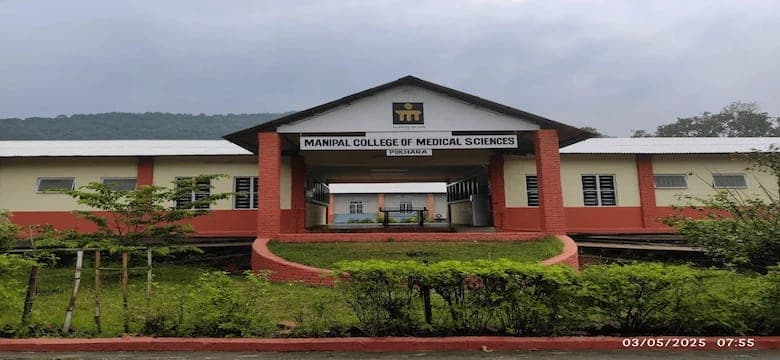

Manipal Pokhara
Pokhara, Gandaki Province
A long-established private medical college in the tourist city of Pokhara, affiliated to Kathmandu University and part of the Manipal education legacy — popular with Indian students for its large teaching hospital and familiar academic system.

Birat Medical College
Biratnagar, Koshi Province
A growing NMC-approved private college in Biratnagar, affiliated to BPKHU, with its own teaching hospital — one of the most affordable Nepal options with excellent connectivity to India via the Jogbani border.
Considering BPKIHS? Apply and talk to a counsellor first.
We match your NEET score, budget and priorities to the right college — fees, eligibility and the full 2026 admission process in one free call.