Confused about what to do after graduation? In this guide, we have covered the best career options after graduation with eligibility, skills, and salary scope to help you choose the right career path.
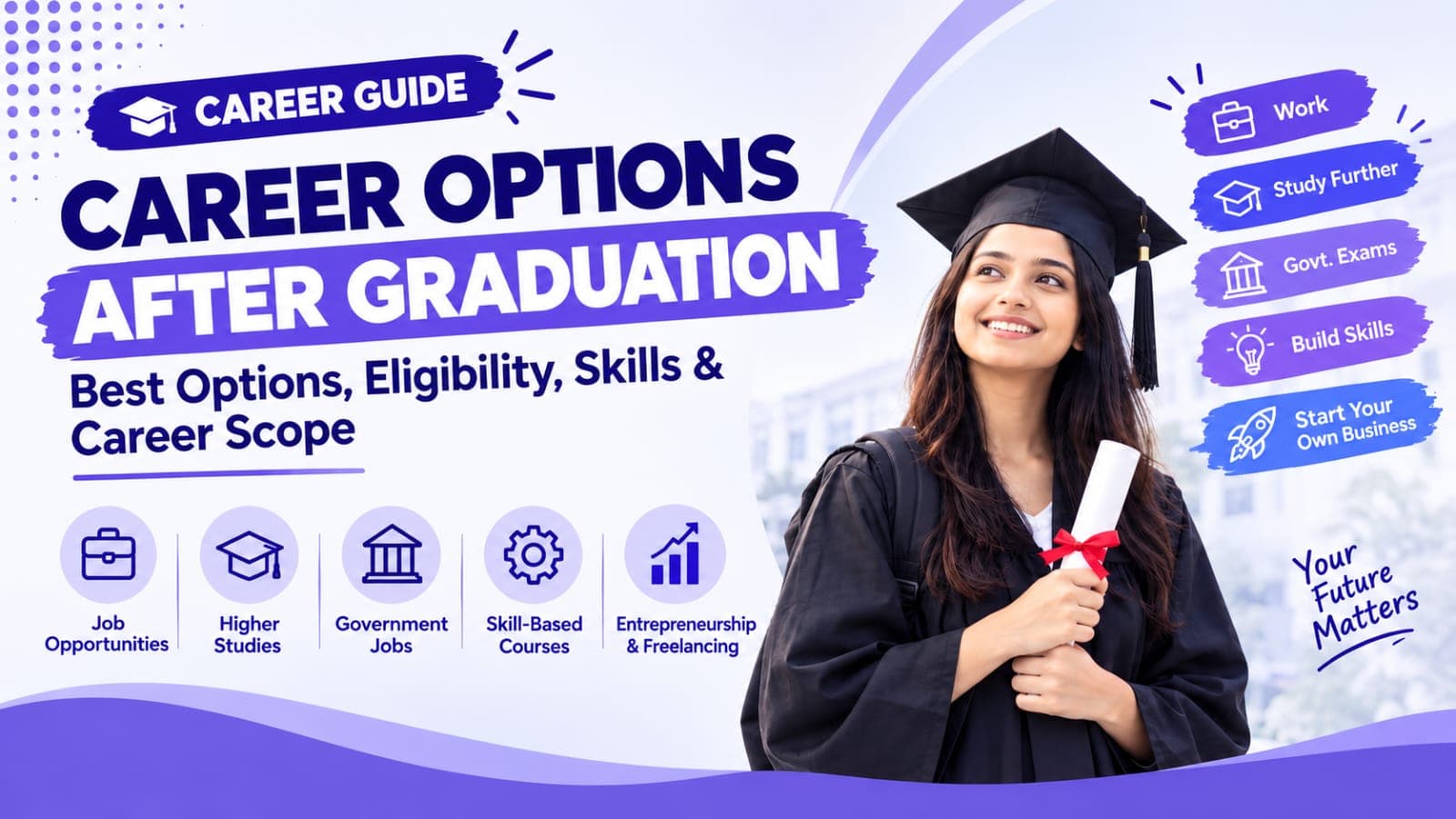
Introduction
Graduation is just the beginning, not the end of your educational journey. Many students find themselves confused about what to do next - whether to look for a job, prepare for competitive exams, or pursue higher studies. Choosing the right path is crucial as it defines your future growth and stability.
Find out which career suits you best in our career options guide, and get personalised help through our free career counselling.
Best Career Options After Graduation
Private Sector Jobs
Graduates from different backgrounds can find opportunities in areas such as sales, marketing, finance, HR, customer service, operations and administration.
Popular job roles include:
Business Development Executive
Marketing Executive
HR Executive
Financial Analyst
Operations Executive
Customer Relationship Executive
The eligibility depends on the job role and employer. Along with a degree, communication, computer and problem-solving skills can improve your chances of employment.
Government Jobs
Government jobs remain a popular career choice because of their structured recruitment process and diverse opportunities.
Graduates can explore exams and recruitment opportunities conducted by organisations such as UPSC, SSC, banking institutions, railways and state government departments.
Eligibility varies by examination. Candidates should always check the official notification before applying.
MBA and Management Courses
An MBA can be considered by graduates who want to move towards management, business or specialised corporate roles.
Popular specialisations include:
Finance
Marketing
Human Resources
Business Analytics
Operations
International Business
Graduates can choose full-time, online or other recognised modes depending on their career requirements. Before enrolling, check the university and programme recognition. UGC provides information on recognised higher education institutions and applicable regulations.
IT and Data-Related Careers
Students from computer, mathematics, science, commerce and even other backgrounds can move into technology-related careers by developing relevant skills.
Popular areas include:
Data Analytics
Web Development
Software Development
Digital Marketing
Cybersecurity
UI/UX Design
Practical projects, internships and recognised certifications can help graduates build job-ready skills.
Banking and Finance
Graduates interested in finance can explore banking, accounting, investment, insurance and financial services.
Possible roles include:
Banking Executive
Financial Analyst
Accountant
Credit Analyst
Relationship Manager
Commerce and finance graduates may have an advantage for some roles, but eligibility varies by employer and examination.
Higher Education and Research
If you enjoy academic learning, pursuing a postgraduate degree can open the door to specialised careers.
Popular choices include:
MA
M.Com
M.Sc
MCA
MBA
Professional postgraduate programmes
Students interested in research or teaching can explore further qualifications according to the requirements of their chosen field.
Digital Marketing and Creative Careers
Digital platforms have created opportunities in areas such as content, social media, SEO, graphic design and performance marketing.
Graduates can build careers as:
SEO Executive
Content Writer
Social Media Executive
Graphic Designer
Performance Marketing Executive
A strong portfolio and practical experience can be particularly useful in creative and digital roles.
Career Options Based on Your Degree
Your graduation subject can help determine suitable career directions.
B.Com: Accounting, banking, finance, taxation, MBA and financial services.
BBA: Marketing, HR, sales, business development, operations and MBA.
BCA: Software development, web development, IT support, data analytics and MCA.
BA: Teaching, content, administration, social services, competitive exams and postgraduate studies.
B.Sc: Research, laboratory work, teaching, healthcare-related fields, data and technical careers depending on specialisation.
B.Tech: Software, engineering, IT, data, consulting, core industries and higher technical education.
Skills to Develop After Graduation
A degree alone may not be enough for many modern jobs. Focus on skills that match your target career.
Important skills include:
Communication
Problem-solving
Digital literacy
Analytical thinking
Teamwork
Time management
Professional writing
Industry-specific technical skills
Internships, projects, certifications and practical experience can make your resume stronger.
How to Choose the Right Career After Graduation?
Before making a decision, ask yourself:
1. What type of work interests me?
2. Do I want a job or higher education?
3. Which skills do I already have?
4. Which skills do I need to improve?
5. What are the entry requirements for my chosen career?
6. What are the long-term growth opportunities
Avoid choosing a career only because it is popular. A better choice is one that matches your abilities, interests and realistic career goals.
Career Scope After Graduation
Graduates today can choose from traditional careers as well as opportunities in technology, finance, management, digital services and entrepreneurship. The National Career Service also provides access to jobs, internships, skill courses and career support resources.
The most important step is to keep learning after graduation. Building relevant skills and gaining practical experience can improve your employability and career growth.
Final Words
There is no single best career option after graduation. Your ideal path depends on your degree, interests, skills and future plans. Whether you choose a private job, government career, MBA, higher studies or a skill-based profession, research the requirements carefully before making a decision.
Frequently Asked Questions
What are the best career options after graduation?
The best career options after graduation depend on your degree, interests, skills and career goals. Popular options include private sector jobs, government jobs, MBA and other postgraduate courses, IT and data-related careers, banking and finance, digital marketing, and research.
What can I do after graduation if I do not want to study further?
If you do not want to pursue higher education immediately, you can start working in the private sector, prepare for government jobs, explore banking and finance roles, or build skills in areas such as digital marketing, data analytics, web development and other industry-focused fields.
Which skills should I develop after graduation for a good career?
Important skills after graduation include communication, problem-solving, analytical thinking, digital literacy, teamwork, time management and professional writing. Industry-specific technical skills, internships, certifications and practical projects can also improve your employability.
Is an MBA a good career option after graduation?
An MBA can be a suitable option for graduates interested in management, business and specialised corporate careers. Popular MBA specialisations include Finance, Marketing, Human Resources, Business Analytics, Operations and International Business. Students should compare the university, programme recognition, fees and career opportunities before enrolling.
How do I choose the right career after graduation?
To choose the right career after graduation, consider your interests, degree, existing skills, career goals and the qualifications required for your preferred field. Research job roles, growth opportunities and industry requirements before making a decision rather than choosing a career only because it is popular.
Topics
Bhagya Shree
An education enthusiast dedicated to helping students navigate their academic journey. Writing about colleges, courses, career paths, and everything to help you make informed decisions about your future.
Need help choosing the right college?
Talk to our verified counsellors — completely free. Get personalised guidance for JEE, NEET, CAT & more.
Book Free Counselling SessionComments
- Business Development Executive
- Customer Relationship Executive
- International Business
- Graduates can build careers as:
- Social Media Executive
- Performance Marketing Executive A strong portfolio and practical experience can be particularly useful in creative and digital roles.