Choosing the right career is one of the most important decisions in a student’s life. With countless options available today—ranging from traditional professions like engineering and medicine to
Introduction
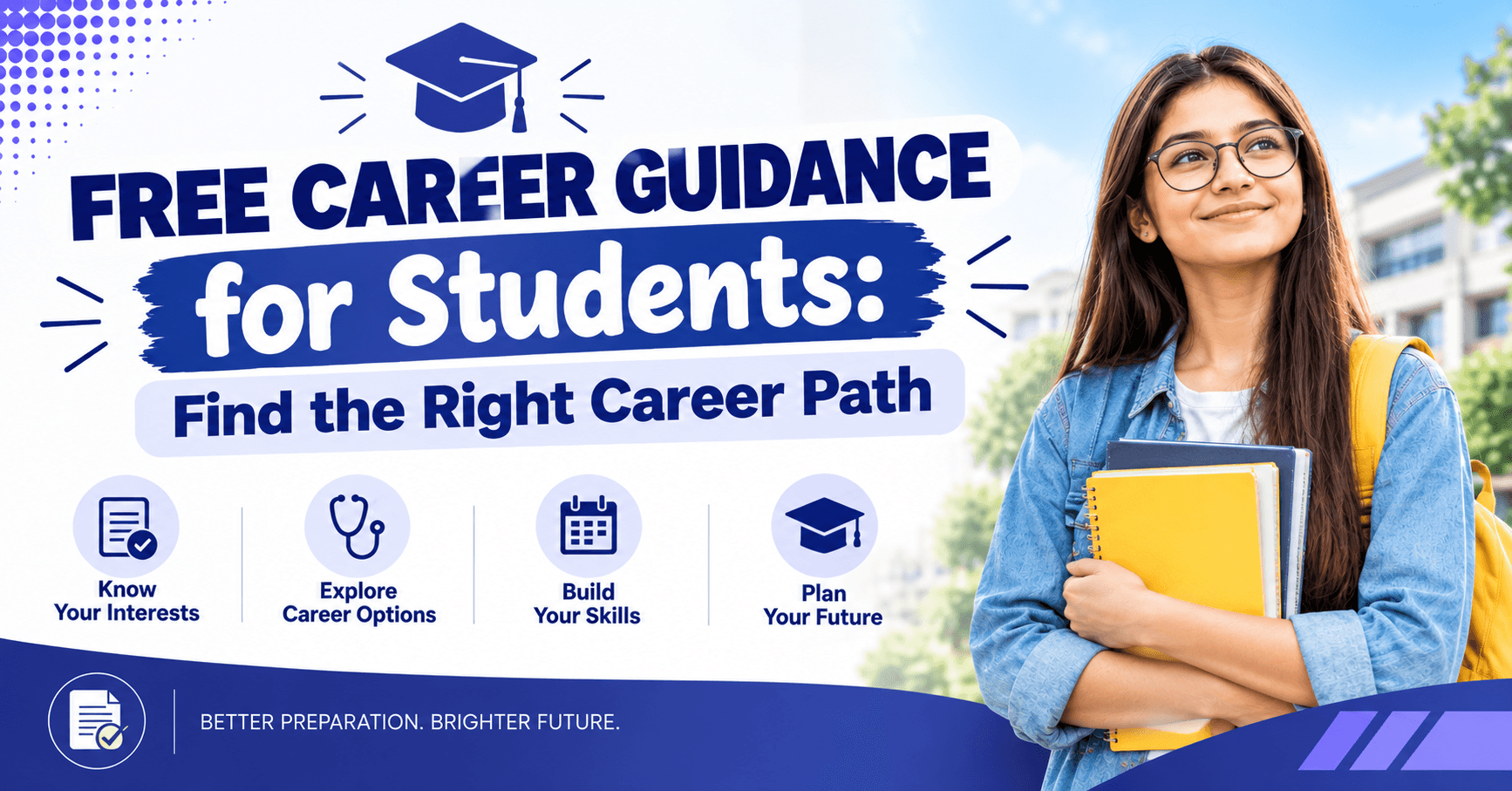
Choosing the right career is one of the most important decisions in a student’s life. With countless options available today—ranging from traditional professions like engineering and medicine to emerging fields such as artificial intelligence, digital marketing, and data science—students often feel confused and overwhelmed. Many make decisions based on peer pressure, family expectations, or limited information, which can lead to dissatisfaction later in life.
This is where free career guidance for students becomes extremely valuable. Proper guidance helps students understand their interests, strengths, and career opportunities, enabling them to make informed decisions. In today’s digital era, students have access to a wide range of free resources, tools, and expert advice that can help them choose the right path without spending money.
In this article, we will explore the importance of career guidance, how students can find the right career path, and the best free resources available for career planning.
Why Career Guidance is Important for Students
Career guidance is not just about selecting a course or job; it is about shaping your future. Many students lack clarity about what they want to pursue, and without proper direction, they may end up choosing careers that do not align with their interests.
1. Helps Identify Strengths and Interests
Every student is unique. Some are good at analytical thinking, while others excel in creativity or communication. Career guidance helps students identify their strengths and match them with suitable career options.
2. Provides Awareness About Career Options
Many students are only aware of a limited number of career paths. Guidance introduces them to new and emerging fields, helping them explore diverse opportunities.
3. Reduces Career Confusion
With so many options available, confusion is natural. Career counselling helps simplify the decision-making process by providing structured information.
4. Improves Decision-Making Skills
Students learn how to evaluate different career paths based on their interests, skills, and future scope.
5. Saves Time and Effort
Choosing the wrong career can lead to wasted years. Proper guidance ensures students start on the right track from the beginning.
Common Challenges Students Face While Choosing a Career
Before discussing solutions, it is important to understand the challenges students commonly face:
Lack of awareness about career options
Pressure from family or society
Fear of failure
Confusion due to too many choices
Limited access to professional guidance
Lack of self-awareness
Recognizing these challenges is the first step toward overcoming them.
Steps to Find the Right Career Path
Finding the right career requires a structured approach. Here are some practical steps students can follow:
Step 1: Self-Assessment
The first step is to understand yourself. Ask questions like:
What subjects do I enjoy?
What are my strengths and weaknesses?
What activities make me feel excited?
Students can also take free online aptitude and personality tests to gain deeper insights.
Step 2: Explore Career Options
Once you understand your interests, explore careers related to them. For example:
If you like technology → Engineering, IT, Data Science
If you enjoy creativity → Design, Media, Content Writing
If you like helping people → Medicine, Psychology, Social Work
Research job roles, required qualifications, and future scope.
Step 3: Understand Required Skills
Every career requires a specific skill set. For example:
Engineers need analytical and problem-solving skills
Designers need creativity and visual thinking
Managers need leadership and communication skills
Understanding these requirements helps you prepare early.
Step 4: Seek Guidance
Students should seek advice from:
Teachers
Career counsellors
Seniors or professionals
Online webinars and workshops
Even free guidance from reliable sources can be extremely helpful.
Step 5: Gain Practical Exposure
Experience is the best teacher. Students can:
Do internships
Participate in workshops
Take online courses
Work on projects
This helps them understand whether a career is right for them.
Step 6: Set Career Goals
After exploring options, set clear goals:
Short-term goals (courses, skills)
Long-term goals (job, career growth)
Having goals keeps you focused and motivated.
Best Free Career Guidance Resources for Students
Today, students can access many free tools and platforms for career guidance. Some of the most useful ones include:
1. Online Career Assessment Tools
These tools analyse your interests and skills to suggest suitable careers.
2. Educational YouTube Channels
Many experts share career advice, exam tips, and industry insights for free.
3. Government Career Portals
Various government platforms provide reliable information about courses, scholarships, and careers.
4. Free Online Courses
Platforms offering free courses help students explore different fields before choosing a career.
5. Webinars and Workshops
Many organizations conduct free sessions where students can interact with experts.
Popular Career Options for Students
Here are some trending career paths students can consider:
1. Engineering and Technology
Computer Science
Artificial Intelligence
Data Science
Robotics
2. Medical and Healthcare
MBBS
Nursing
Pharmacy
Physiotherapy
3. Business and Management
BBA, MBA
Finance
Marketing
Entrepreneurship
4. Creative Fields
Graphic Design
Animation
Content Writing
Fashion Design
5. Government Jobs
UPSC
SSC
Banking
Railways
6. Emerging Careers
Digital Marketing
Cybersecurity
Blockchain
Cloud Computing
Role of Parents and Teachers in Career Guidance
Parents and teachers play a crucial role in shaping a student’s career.
Parents Should:
Encourage exploration
Avoid forcing career choices
Support the child’s interests
Teachers Should:
Guide students based on their strengths
Provide career information
Motivate students to achieve their goals
A supportive environment helps students make better decisions.
Importance of Skill Development
In today’s competitive world, skills are as important as degrees. Students should focus on:
Communication skills
Problem-solving ability
Digital skills
Time management
Critical thinking
Learning these skills early gives students an advantage in their careers.
Career Guidance After 10th and 12th
After 10th
Students must choose a stream:
Science
Commerce
Arts
This decision should be based on interest and future goals.
After 12th
Students can choose:
Professional courses
Graduation programs
Diploma courses
Proper guidance at this stage is very important.
Mistakes to Avoid While Choosing a Career
Students should avoid these common mistakes:
Following friends blindly
Choosing a career based only on salary
Ignoring personal interests
Not researching properly
Taking decisions in a hurry
Avoiding these mistakes can lead to better career outcomes.
Future Trends in Career Opportunities
The job market is constantly evolving. Some future trends include:
Increased demand for tech-related jobs
Growth in remote work opportunities
Importance of digital skills
Rise of freelance and gig careers
Students should stay updated and adaptable.
Conclusion
Choosing the right career path is not an easy task, but with proper guidance, it becomes much simpler. Free career guidance resources have made it possible for every student to explore opportunities and make informed decisions without financial barriers.
Students should focus on understanding themselves, exploring options, and developing skills. With the right approach and mindset, they can build a successful and fulfilling career.
Remember, the best career is not the one that others choose for you—it is the one that matches your passion, skills, and goals.
FAQs (Frequently Asked Questions)
What is career guidance for students?
Career guidance is the process of helping students choose the right career path based on their interests, skills, and goals.
Is free career guidance effective?
Yes, free career guidance can be very effective if students use reliable resources and follow structured steps.
How can I choose the right career?
You can choose the right career by understanding your interests, exploring options, and seeking guidance from experts.
Are online career tests useful?
Yes, online career tests help identify your strengths and suggest suitable career options.
When should students start career planning?
Students should start career planning as early as possible, preferably after class 10.
Can I change my career later?
Yes, career changes are possible, but early planning helps avoid unnecessary challenges.
What are the best career options in 2026?
Some top options include AI, Data Science, Digital Marketing, Healthcare, and Management.
Do I need a career counsellor?
A counsellor can help, but students can also use free online resources for guidance.
Topics
Goldi Kumari
An education enthusiast dedicated to helping students navigate their academic journey. Writing about colleges, courses, career paths, and everything to help you make informed decisions about your future.
Need help choosing the right college?
Talk to our verified counsellors — completely free. Get personalised guidance for JEE, NEET, CAT & more.
Book Free Counselling SessionComments
- Lack of awareness about career options
- Pressure from family or society
- Confusion due to too many choices
- Limited access to professional guidance
- Lack of self-awareness
- What subjects do I enjoy?