Introduction Checking your NEET OMR sheet for errors is one of the most important steps after the exam. It helps you confirm whether the marke...
Introduction
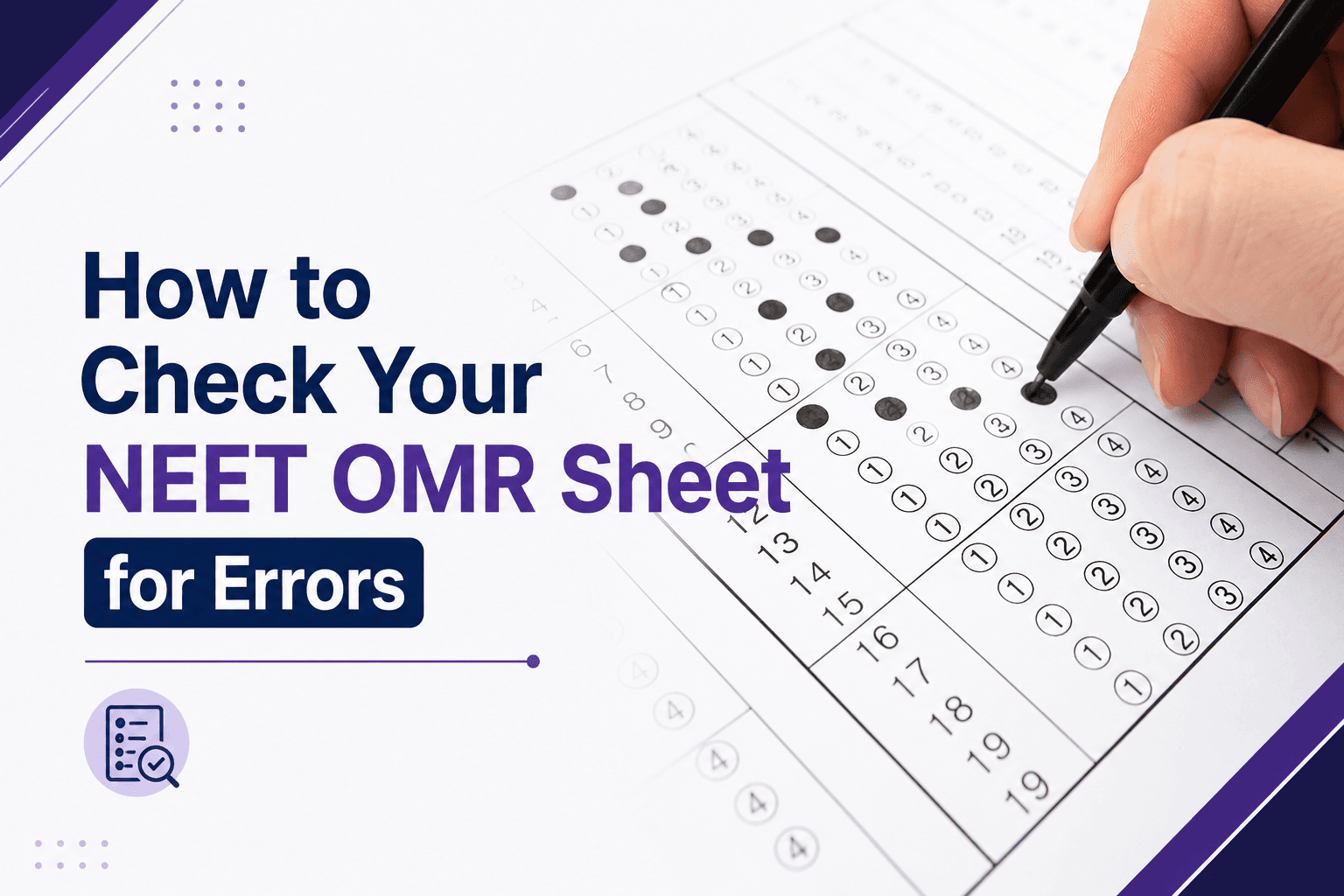
Checking your NEET OMR sheet for errors is one of the most important steps after the exam. It helps you confirm whether the marked responses match what you remember from the test hall and whether any correction or objection is needed.
If you want the full release and challenge walkthrough, use the main guide here: NEET UG 2026 OMR Response Sheet Released: Download Link, Challenge Process & Last Date.
Quick Summary Box
| Category | Details |
|---|---|
| What to check | Marked responses, roll number, booklet code, blank questions |
| Best time to check | Immediately after downloading the response sheet |
| Main purpose | Spot mismatches before answer key challenge |
| Common risks | Wrong bubbling, shifted answers, wrong booklet code |
| Next step | Compare with answer key and submit a challenge if needed |
Step-by-step check
1. Open the response sheet
Log in to the official NEET portal and open your scanned OMR response sheet. The sheet shows the answers you marked in the exam, so it is the base document for checking errors.
2. Match the booklet code
Check that your question paper set or booklet code on the OMR sheet matches the one you actually received in the exam hall. If the code is wrong, your answers may be compared against the wrong set.
3. Compare each marked answer
Go question by question and compare the bubble marked on the sheet with what you remember selecting in the exam. A good method is to scan the questions in small batches so you do not lose track.
4. Look for empty or multiple marks
Check whether any question is left blank when you remember answering it, or whether more than one bubble appears shaded for the same question. Both can create scoring issues or confusion during evaluation.
5. Verify personal details
Review the roll number, candidate information, and other printed details carefully. Errors in these fields can cause administrative problems even if the answers are correct.
Common error types
What mistakes happen most often?
The most common NEET OMR issues are:
- wrong bubbling or misalignment,
- multiple marks for one question,
- faint shading,
- wrong booklet code,
- and incorrect personal details.
How to spot them fast
| Error type | What it looks like | Why it matters |
|---|---|---|
| Wrong bubble row | Answer appears shifted from the intended question | Can change the score for several questions |
| Multiple marks | Two bubbles filled for one question | Scanner may read it incorrectly |
| Faint mark | Bubble is too light | May not be detected properly |
| Wrong code | Booklet code does not match your paper | Answers may be checked against the wrong key |
| Wrong details | Roll number or ID field incorrect | Can create administrative issues |
How to compare
Best checking method
Use a two-step comparison:
- Compare your memory or rough notes with the OMR sheet.
- Then compare the OMR sheet with the official answer key.
What should you focus on first?
Start with questions you were unsure about, then move to the ones you were confident on. That way, you catch high-risk errors early and avoid spending too much time on simple matches. [web:148][web:150]
What to do next
If you find a mismatch between your marked answer and the official answer key, collect proof and prepare for the challenge window. The OMR sheet is only the first check; the answer key comparison is what confirms whether the issue is worth raising.
FAQs
How do I know if my NEET OMR sheet has an error?
Look for shifted bubbles, blank answers you remember attempting, multiple markings, wrong booklet code, or incorrect personal details.
Should I check the OMR sheet before the answer key?
Yes. Check the OMR sheet first so you understand what the system recorded before comparing it with the answer key.
What if a bubble looks faint?
A faint bubble may be difficult for the scanner to read, so note it carefully when reviewing your sheet.
Can wrong booklet code affect marks?
Yes. If the booklet code is wrong, the answer key comparison may become inaccurate.
What should I do if I find an error?
Compare it with the official answer key and use the challenge process if the error could affect your score.
Final note
Checking your NEET OMR sheet is not just about finding obvious mistakes. It is about verifying the exact response history the system recorded, so you can protect your score and act quickly if needed.
The safest approach is simple: review the sheet line by line, confirm your booklet code, and compare suspicious questions with the answer key before the deadline.
Useful resources
About College For Me
College For Me helps students with career counselling, college selection, admission guidance, scholarship assistance, and college comparison. The platform supports students in making informed decisions based on interests, budget, and future goals.
Topics
Admin
An education enthusiast dedicated to helping students navigate their academic journey. Writing about colleges, courses, career paths, and everything to help you make informed decisions about your future.
Need help choosing the right college?
Talk to our verified counsellors — completely free. Get personalised guidance for JEE, NEET, CAT & more.
Book Free Counselling SessionComments
- Introduction Checking your NEET OMR sheet for errors is one of the most important steps after the exam.
- It helps you confirm whether the marked responses match what you remember from the test hall and whether any correction or objection is needed.
- Compare each marked answer Go question by question and compare the bubble marked on the sheet with what you remember selecting in the exam.
- Look for empty or multiple marks Check whether any question is left blank when you remember answering it, or whether more than one bubble appears shaded for the same question.
- Then compare the OMR sheet with the official answer key.