Quick Peek Career guidance is a structured process that helps people of all ages understand themselves, explore career options, and make infor...
Quick Peek
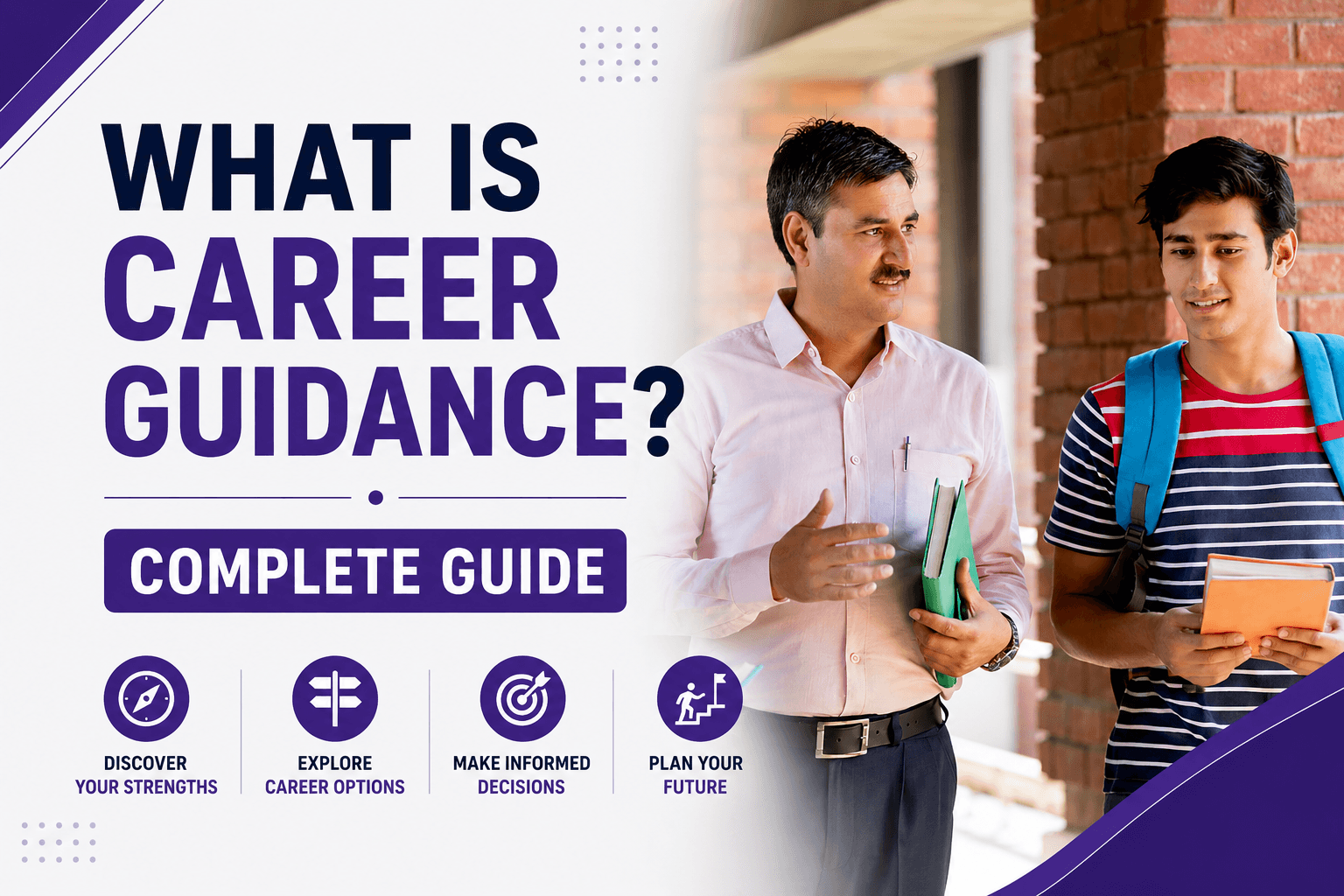
Career guidance is a structured process that helps people of all ages understand themselves, explore career options, and make informed educational and occupational choices. It combines self-assessment, career information, expert advice, and planning to create a clear roadmap for your future. In India, career guidance is especially important for students after Class 10 and Class 12, when they must choose streams, courses, and career paths. The best career guidance platforms offer personalized counselling, aptitude tests, and end-to-end support from career discovery to college admission. In this complete guide, you will learn everything about career guidance, including its meaning, process, benefits, and how it differs from career counselling. We will also link you to dedicated resources for students, parents, and Class 12 aspirants so you can get targeted support based on your needs.
Introduction
Choosing a career is one of the most important decisions in life, yet many students and parents make this decision without proper information or guidance. They may rely on peer pressure, family traditions, or outdated notions about which careers are “safe” or “prestigious.” This often leads to confusion, wrong choices, and regret later.
Career guidance solves this problem by providing a systematic approach to career decision-making. It helps you understand your strengths, interests, and values, then matches them with suitable career options. It also gives you information about courses, exams, colleges, and job markets so you can plan your path with confidence.
Whether you are a student in Class 9, 10, 11, or 12, or even a college student or working professional, career guidance can help you make better choices and avoid costly mistakes.
What Is Career Guidance?
Definition
Career guidance refers to services and activities that help people of any age make educational, training, and occupational choices and manage their careers effectively. It helps individuals reflect on their ambitions, interests, qualifications, skills, and talents, and relate this self-knowledge to potential career paths.
According to UNESCO and OECD, career guidance includes:
- Career education
- Career information
- Individual and group counselling
- Skills assessment and psychometric testing
- Engagement with employers and industry experts
- Job-seeking and self-employment skills development
Core Purpose
The main goal of career guidance is to develop career management skills in individuals. This means helping people:
- Understand themselves (interests, aptitude, values, personality).
- Explore the world of work and education.
- Make informed decisions about courses, colleges, and careers.
- Plan and adapt their career path over time.
Career Guidance vs Career Counselling
Many people use the terms career guidance and career counselling interchangeably, but there is a subtle difference:
| Feature | Career Guidance | Career Counselling |
|---|---|---|
| Scope | Broader; includes information, education, assessment, and planning | More focused; involves one-on-one sessions with a counsellor |
| Approach | Can be group-based, online, or self-directed | Usually personalized and interactive |
| Tools | Includes workshops, seminars, resources, tests | Relies heavily on counselling sessions and assessments |
| Outcome | Provides overall direction and awareness | Provides deep, personalized insight and action plan |
In practice, both are often combined. For example, a platform may offer career guidance resources (blogs, webinars, tools) along with career counselling sessions (one-on-one expert advice).
For comprehensive support, visit:Career Counselling – College For Me
Why Is Career Guidance Important?
1. Reduces Confusion
With hundreds of career options available, students often feel overwhelmed. Career guidance narrows down choices based on their profile, making the decision easier.
2. Prevents Wrong Choices
Many students choose engineering or medical streams without understanding whether they suit their aptitude or interest. Career guidance helps them explore alternatives like design, law, data science, hospitality, and more.
3. Saves Time and Money
A wrong career choice can cost lakhs in fees and years of time. Career guidance helps you choose the right path from the start, avoiding costly course changes or dropouts.
4. Aligns with Job Market
Career guidance provides up-to-date information about job trends, emerging fields, and skill requirements, so you choose a career with real future potential.
5. Supports Parents
Parents often want to help but may not have the latest information. Career guidance equips them with the knowledge to support their children effectively.
Who Needs Career Guidance?
Career guidance is useful for everyone, but it is especially important for:
Students After Class 10
This is when students choose their stream (Science, Commerce, Arts, Vocational). Career guidance helps them pick a stream that matches their strengths and future goals.
Students After Class 12
Class 12 graduates must choose courses, colleges, and entrance exams. Career guidance helps them select the best options and prepare a backup plan.
College Students
Even in college, students may realize they are in the wrong course or want to explore new fields. Career guidance helps them pivot or upskill.
Working Professionals
Professionals looking to change careers, upskill, or return to work after a break can also benefit from career guidance.
For student-specific guidance, visit:Career Counselling for Students
The Career Guidance Process
A structured career guidance process typically includes the following steps:
Step 1: Self-Assessment
This involves understanding your:
- Interests (what you enjoy doing)
- Aptitude (what you are good at)
- Values (what matters to you in a career)
- Personality (how you interact with the world)
Tools like aptitude tests, interest inventories, and personality assessments are used here.
Step 2: Career Exploration
Once you know yourself, you explore career options that match your profile. This includes:
- Traditional careers (engineering, medical, CA, etc.)
- Emerging careers (AI, data science, UX design, etc.)
- Creative careers (arts, media, design, etc.)
- Skilled careers (hospitality, aviation, healthcare, etc.)
Step 3: Information Gathering
You collect detailed information about:
- Courses and specializations
- Entrance exams and eligibility
- Colleges and universities
- Fees, duration, and ROI
- Job roles and career growth
Step 4: Decision-Making
With the help of a counsellor, you shortlist the best options and make a final decision. This includes choosing a primary path and a backup plan.
Step 5: Action Planning
You create a step-by-step plan that includes:
- Exam preparation timeline
- Application deadlines
- College shortlisting
- Scholarship opportunities
- Skill development activities
Step 6: Follow-Up and Support
Career guidance does not end with a decision. Good platforms offer follow-up sessions to track progress, answer new questions, and adjust the plan if needed.
For Class 12-specific guidance, visit:Career Counselling for Class 12
Benefits of Career Guidance
For Students
- Clarity on career options
- Better stream and course selection
- Reduced stress and anxiety
- Improved academic performance
- Higher chances of success in competitive exams
For Parents
- Better understanding of their child’s potential
- Ability to support without pressure
- Clarity on fees, ROI, and future prospects
- Improved parent-child communication
For Society
- Reduced dropout rates
- Better alignment between education and employment
- More satisfied and productive workforce
- Economic growth through skilled professionals
For parent-focused resources, visit:Career Counselling for Parents
Common Myths About Career Guidance
Myth 1: Only Weak Students Need Career Guidance
Reality: Career guidance is for everyone, including high-performing students who want to optimize their choices.
Myth 2: Career Guidance Is Only for Science Students
Reality: Students from all streams — Science, Commerce, and Arts — benefit from career guidance.
Myth 3: Career Guidance Is Too Expensive
Reality: Many platforms, including College For Me, offer affordable and transparent pricing.
Myth 4: Career Guidance Guarantees Success
Reality: Career guidance provides direction and support, but success depends on your effort and execution.
Myth 5: One Session Is Enough
Reality: Some students need multiple sessions to explore options, clarify doubts, and finalize their plan.
How to Choose the Right Career Guidance Platform
Not all platforms are equal. Here’s what to look for:
1. Qualified Counsellors
Ensure the counsellors are certified and experienced in the Indian education system.
2. Personalized Approach
Avoid platforms that give generic advice. Look for ones that use assessments and one-on-one sessions.
3. Up-to-Date Information
The platform should have the latest data on courses, exams, and job trends.
4. Comprehensive Resources
Check if the platform offers blogs, webinars, college comparison tools, and scholarship support.
5. Affordable and Transparent
Pricing should be clear, with no hidden charges.
6. Positive Reviews
Look for testimonials and reviews from past students and parents.
FAQs
What is the best age to start career guidance?
Ideally, students should start in Class 9 or 10 when they choose their stream. However, it is never too late. Class 12 students and even college students can benefit.
Is career guidance only for students?
No, career guidance is useful for college students, working professionals, and even people looking to change careers or return to work after a break.
How many sessions are needed?
For most students, 1–3 sessions are enough to get clarity. Some may need more if they have complex requirements.
Can career guidance help with college admission?
Yes, many platforms provide end-to-end support from career selection to college admission, including application filling and scholarship guidance.
Is online career guidance effective?
Yes, online career guidance is highly effective if the platform is reputable and the counsellors are experienced. It offers the same quality as offline sessions with added convenience.
Final Verdict
Career guidance is not a luxury; it is a necessity in today’s complex education and job landscape. It helps you understand yourself, explore options, and make informed decisions that shape your future. Whether you are a student, parent, or professional, the right career guidance can save you time, money, and regret.
College For Me offers comprehensive career guidance services tailored to your needs. From self-assessment to college admission, we support you at every step.
To get started, visit:
- Career Counselling for Students
- Career Counselling for Parents
- Career Counselling for Class 12
- Career Counselling – College For Me
Useful Resources
About College For Me
College For Me helps students with career counselling, college selection, admission guidance, scholarship assistance, and college comparison. The platform supports students in making informed decisions based on interests, budget, and future goals.
Topics
Admin
An education enthusiast dedicated to helping students navigate their academic journey. Writing about colleges, courses, career paths, and everything to help you make informed decisions about your future.
Need help choosing the right college?
Talk to our verified counsellors — completely free. Get personalised guidance for JEE, NEET, CAT & more.
Book Free Counselling SessionComments
- Individual and group counselling
- Skills assessment and psychometric testing
- Engagement with employers and industry experts
- Job-seeking and self-employment skills development
- Understand themselves (interests, aptitude, values, personality).
- Explore the world of work and education.